Bing History
Introduction
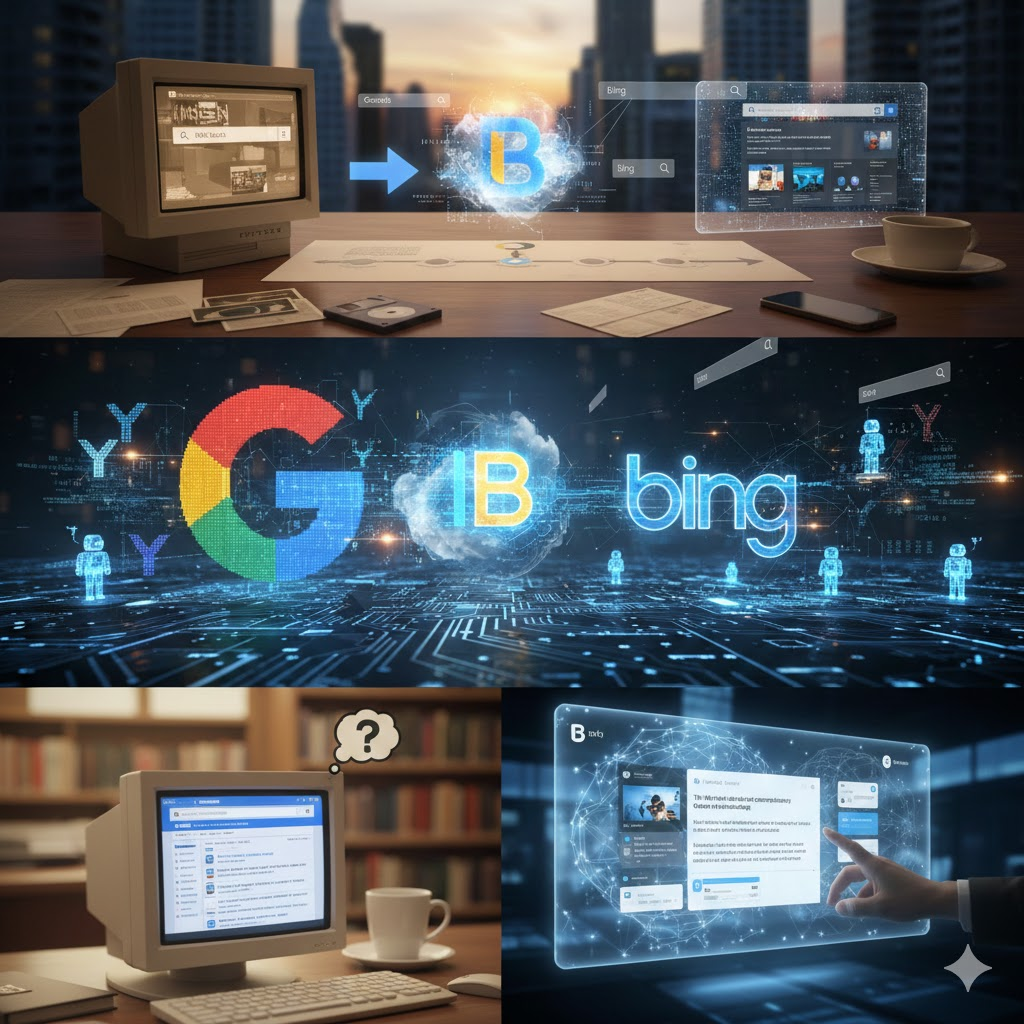
If you’ve ever used Microsoft’s search engine, you may have wondered how it came to be. Bing history is full of innovation, rebranding, AI breakthroughs, and competitive battles with giants like Google and Yahoo. Whether you’re a marketer, a student, or just curious, understanding Bing’s evolution helps you understand how modern search works.
In this article, you’ll discover:
- How Bing was created
- The milestones that shaped its growth
- How its features evolved over time
- Why Bing still matters today
- How Bing uses AI to improve search
Let’s dive deep into the full history of Bing — from its early days to its cutting-edge AI era.
What Is Bing? A Quick Overview
Before exploring Bing history, it’s important to know what Bing is.
Bing is Microsoft’s full-scale search engine designed to help users find web pages, images, videos, maps, and answers across the internet. Over the years, Bing has turned into an advanced search ecosystem integrated with:
- Windows OS
- Microsoft Edge
- Xbox
- Microsoft 365
- AI-powered Copilot
Its journey is full of bold moves, major redesigns, and innovations in search accuracy.
The Complete Timeline of Bing History
The Early Stage: Before Bing (1998–2008)
Bing did not appear overnight. Microsoft experimented with multiple search services before the Bing brand launched.
MSN Search (1998)
- Microsoft launched MSN Search inside the MSN portal.
- It initially depended on external search engines like Inktomi.
- By early 2000s, Microsoft built its own web crawler and index.
Windows Live Search (2006)
In 2006, MSN Search became Windows Live Search, aiming to compete with Google more aggressively.
But users still found it slow and less accurate.
Live Search (2007)
In 2007, Microsoft rebranded again to simplify the search brand.
However, this version also failed to gain major market share.
Result: Microsoft realized it needed a stronger identity, better branding, and a fresh launch.
The Official Birth of Bing (2009)
On June 3, 2009, Microsoft officially launched Bing—a brand-new search engine with:
- Smarter search suggestions
- Better categorization
- Improved user interface
- A strong focus on relevance
The tagline was “The Decision Engine”, highlighting its goal to provide actionable answers, not just links.
Bing quickly gained attention for features like:
- Daily HD background photos
- Enhanced video previews
- “Related searches” sidebar
This was the true beginning of modern Bing history.
Bing’s Rise to Popularity (2010–2013)
During this period, Bing rolled out major improvements.
Bing + Yahoo Partnership (2010)
One of the biggest moments in Bing’s history came when Yahoo adopted Bing as its primary search engine backend.
This partnership helped Bing gain:
- Larger dataset
- Higher ad revenue
- Increased search share
Bing Maps & Image Search Upgrade
Bing expanded beyond web search by releasing:
- Bing Maps (3D view, StreetSide)
- Better image filters and visual options
- Integration with Microsoft services
By 2013, Bing had become the second most-used search engine worldwide.
AI & Intelligence Era Begins (2014–2018)
Search engines evolved beyond links — and Bing kept up.
Integration with Cortana (2014)
Microsoft’s voice assistant, Cortana, used Bing as its search engine.
This allowed:
- Voice-based search
- Personalized recommendations
- Real-time answers
Bing Predicts (2015)
Bing used machine learning to predict:
- Elections
- TV show outcomes
- Sports results
It gained popularity for surprisingly accurate predictions.
Smarter Instant Answers
Bing improved answer boxes to include:
- Unit conversions
- Weather
- Flights
- Recipes
- News summaries
Bing Reaches a New Level: Visual & Intelligent Search (2019–2022)
By this time, Bing was fully redesigned and powered by strong AI.
Bing Visual Search
Users could search using photos, similar to Google Lens.
Bing Webmaster Tools Upgrade
Better SEO tools were rolled out to help website owners track performance.
Improved Local Search & Shopping Features
Microsoft made Bing more competitive by adding:
- Rich local business listings
- Shopping comparisons
- Rewards for searches
This era marked Bing’s transition into a smart, user-first ecosystem.
The Biggest Revolution in Bing History: AI-Based Bing (2023–Present)
2023 was a turning point.
Launch of New Bing with AI (ChatGPT Integration)
Microsoft partnered with OpenAI and integrated GPT models into Bing search.
This created:
- AI chat search
- Human-like answers
- Better summarization
- Real-time web data with AI reasoning
This version of Bing was branded as the “AI-powered search engine of the future.”
Microsoft Copilot Integration (2023–2024)
Bing became the core search engine inside Microsoft Copilot, now used across:
- Windows 11
- Microsoft Edge
- Microsoft 365
- Office apps
Today, Bing is more than a search engine — it’s part of an AI ecosystem used by millions.
Key Features That Shaped Bing History
Bing Visual Search
Allows users to find items by uploading photos — great for shopping, objects, or unknown places.
Bing Maps
Advanced mapping with satellite imagery, traffic, 3D buildings, and venue maps.
Bing Rewards (Microsoft Rewards)
Users earn points for every search and redeem them for:
- Gift cards
- Xbox credits
- Donations
Bing Chat (AI Search Mode)
Provides:
- Long answers
- Content summaries
- Travel plans
- Learning support
- Image generation
- Code assistance
Integration with Windows
Bing powers:
- Start menu search
- Windows Search bar
- Microsoft Edge search
Privacy & Security Features
Bing includes:
- SafeSearch
- Strict tracking protection
- GDPR compliance
Why Bing Still Matters Today
Many people ask:
“If Google dominates, why does Bing still matter?”
Here are the reasons:
1. Bing Powers Multiple Ecosystems
It supports searches inside:
- Xbox
- Windows
- Microsoft Office
- LinkedIn
- ChatGPT / Copilot
2. It Offers a Different Search Experience
Users often prefer:
- More visual results
- Clean interface
- Better image/video previews
3. Strong in Enterprise Search
Microsoft dominates corporate spaces, which boosts Bing usage.
4. AI Leadership
Bing was the first major search engine to adopt full AI chat mode.
Bing History vs Google History: A Quick Comparison
| Feature | Bing | |
| Launch Year | 1998 | 2009 |
| Market Share | ~90% | 3–9% (varies by region) |
| AI Integration | Bard → Gemini | Bing Chat → Copilot |
| Image Search | Google Lens | Bing Visual Search |
| Voice Assistant | Google Assistant | Cortana (retired) |
| Unique Strength | Speed & index size | Visual search + AI + rewards |
Common Questions About Bing History
When was Bing launched?
Bing was launched on June 3, 2009.
What was Bing called before 2009?
Before Bing, Microsoft used:
- MSN Search
- Windows Live Search
- Live Search
Is Bing owned by Microsoft?
Yes, Bing is fully owned and operated by Microsoft.
Why did Microsoft create Bing?
To compete with Google and provide better, action-focused search results.
When did Bing integrate AI?
In 2023, Bing integrated OpenAI’s GPT technology to create Bing AI Chat.
Conclusion
The story of Bing history is a journey filled with innovation, major upgrades, and AI breakthroughs. From MSN Search in the 1990s to Bing AI in 2023 and beyond, Bing has continuously evolved to meet user needs.
Whether you’re comparing search engines, studying digital history, or optimizing SEO, Bing remains an important part of the internet ecosystem.
Stay in touch to get more updates & alerts on Sosomodapks! Thank you
About the Author