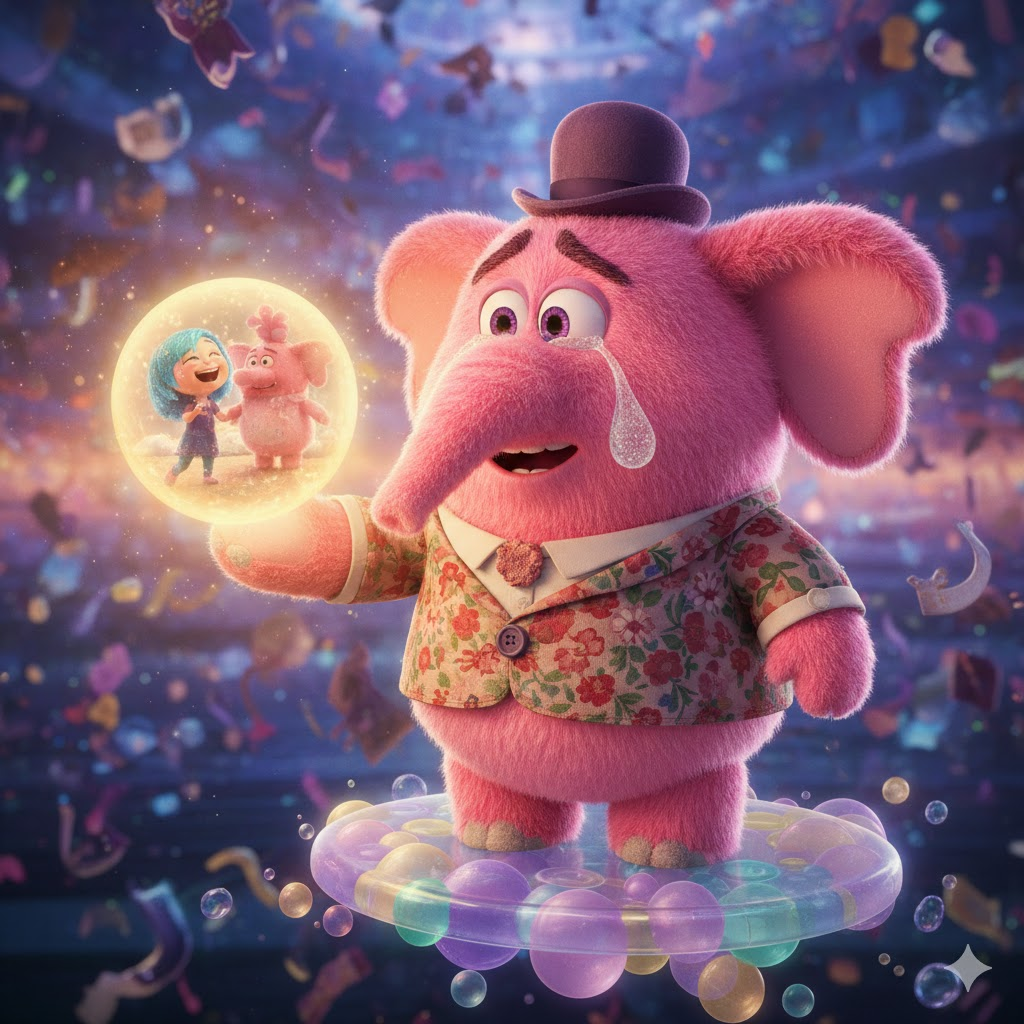
Bing Bong
Introduction:
In Disney Pixar’s Inside Out, a film that delves into the complex world of emotions, one character stands out for his heartwarming and deeply emotional arc: Bing Bong, the imaginary friend. While many viewers may remember him as the lovable, pink elephant with a dash of sadness, there’s much more to Bing Bong’s story than meets the eye. This character serves as a powerful symbol of growing up, the importance of memories, and the bittersweet nature of nostalgia.
This blog post will explore Bing Bong’s role in Inside Out, his emotional journey, and how he embodies key themes within the movie. By the end, you’ll have a deeper understanding of his significance and why his storyline resonates with so many viewers.
Who Is Bing Bong? A Character Overview
Bing Bong is Riley’s imaginary friend, created in her childhood. He’s a hybrid of various creatures, with the body of an elephant, the tail of a cat, and the trunk of a dolphin, making him an eccentric and endearing figure. Though his vibrant personality and playful nature make him an amusing character, his true emotional depth becomes apparent as the story unfolds.
In the movie, Bing Bong plays a pivotal role in guiding Joy and Sadness through the vast expanse of Riley’s mind, helping them navigate through different memory zones. His primary function seems to be that of a guide, but as we learn more about him, we see that he represents something far more important — the loss of childhood innocence.
The Emotional Journey of Bing Bong
At first glance, Bing Bong appears to be a joyful, carefree imaginary friend with a penchant for fun and mischief. However, as the film progresses, we learn that his journey is a reflection of Riley’s own emotional maturation and the complexities of letting go of childhood.
Bing Bong’s emotional arc is one of nostalgia, selflessness, and eventual sacrifice. Early in the film, when Joy and Sadness first meet him, he is desperate to be remembered. His desire to remain in Riley’s life represents the universal fear of being forgotten as children grow up. This is a poignant commentary on the fading nature of childhood imagination as one enters adolescence and adulthood.
The Heartbreaking Scene: One of the most emotional moments in the film occurs when Bing Bong sacrifices himself to save Joy. In a selfless act, he allows himself to disappear into the Memory Dump to give Joy the chance to escape. His final words, “Take her to the moon for me,” encapsulate his selflessness and his understanding of Riley’s need to move forward. This act of sacrifice symbolizes the painful yet necessary process of outgrowing certain aspects of childhood, no matter how beloved they may be.
Bing Bong as a Metaphor for Childhood Memories
Bing Bong’s character isn’t just a quirky figure; he serves as a profound metaphor for childhood memories. He represents the innocent and imaginative aspects of Riley’s past that no longer have a place in her present life. His gradual disappearance echoes the process of growing up, where certain memories and parts of one’s past fade away to make room for new experiences.
As Joy and Sadness navigate Riley’s mind, Bing Bong’s presence becomes a reminder of the emotional importance of those memories, even when they no longer serve a functional purpose. The act of letting go of Bing Bong is symbolic of the emotional shift that happens as a person transitions from childhood to adolescence. It’s an emotional shift that can be painful but ultimately allows room for new growth and understanding.
The Impact of Bing Bong’s Sacrifice on Riley’s Emotional Growth
Bing Bong’s selfless act directly influences Riley’s emotional development. His sacrifice allows Joy to escape the Memory Dump, bringing her back to Riley’s core emotions. This moment becomes the turning point in the movie, where Riley’s emotions begin to understand that both happiness and sadness are essential parts of her life.
Bing Bong’s departure serves as a catalyst for Riley’s emotional maturity, showing that while it’s difficult to let go of childhood, doing so is necessary for personal growth. His sacrifice teaches Joy, and by extension, Riley, the importance of balance between happiness and sadness. Without sadness, there can be no true joy, and without the painful experiences of growing up, there would be no emotional depth.
Bing Bong’s Symbolism: Nostalgia and the Loss of Innocence
Bing Bong is much more than an imaginary friend; he symbolizes the fading innocence of childhood. His gradual disappearance from Riley’s mind represents the natural process of growing up, where the imaginary worlds and friends of childhood are replaced by more mature experiences.
In Inside Out, the Memory Dump is where all forgotten memories are sent, and Bing Bong’s ultimate fate lies there. This symbolizes the way memories of childhood, no matter how dear, eventually fade away as we move on to new phases in life. The Memory Dump isn’t just a physical place; it’s a metaphorical representation of the forgotten corners of the mind, where parts of ourselves are stored and left behind.
Why Bing Bong’s Story Resonates with Audiences
Bing Bong’s emotional journey resonates deeply with audiences for several reasons. His story is universal; everyone can relate to the feeling of outgrowing something from their childhood. Whether it’s an imaginary friend, a favorite toy, or a cherished memory, we all experience the pain of letting go.
Moreover, Bing Bong’s sacrifice is a powerful lesson in selflessness and growth. His willingness to put Riley’s well-being above his own desires mirrors the real-life sacrifices many make for the people they love. This is a theme that resonates with adults as much as children, as the movie highlights that growth often requires the painful yet necessary act of letting go.
Lessons We Can Learn from Bing Bong
1. The Importance of Letting Go
Bing Bong’s journey teaches us that it’s okay to let go of parts of our past. While it can be difficult, allowing ourselves to move forward is essential for personal growth. The things we hold dear in childhood may no longer have a place in our adult lives, but that doesn’t mean they weren’t important.
2. Embracing Both Joy and Sadness
Bing Bong’s ultimate sacrifice reveals the emotional complexity of life. Both joy and sadness are necessary for a well-rounded emotional experience. We must learn to embrace and acknowledge both aspects of our emotions in order to live a fuller life.
3. The Value of Selflessness
Bing Bong’s act of selflessness highlights the importance of caring for others, even at the cost of our own desires. His sacrifice reflects a deeper understanding of love and the willingness to do what’s best for others, a lesson that resonates across all ages.
Conclusion:
Bing Bong may have faded away in Inside Out, but his emotional impact lingers long after the movie ends. His character teaches us valuable lessons about growing up, remembering our past, and embracing both happiness and sadness. Through his sacrifice, Bing Bong leaves a legacy that resonates with anyone who has experienced the bittersweet nature of moving on from childhood.
Stay in touch to get more updates & alerts on Sosomodapks! Thank you
About the Author